Call Recording Laws by State: Complete 2025 Legal Compliance Guide
Navigate the complex landscape of call recording laws with confidence. This comprehensive guide covers federal regulations, state-by-state requirements, and best practices for legal compliance in 2025. Learn the critical differences between one-party and all-party consent states.
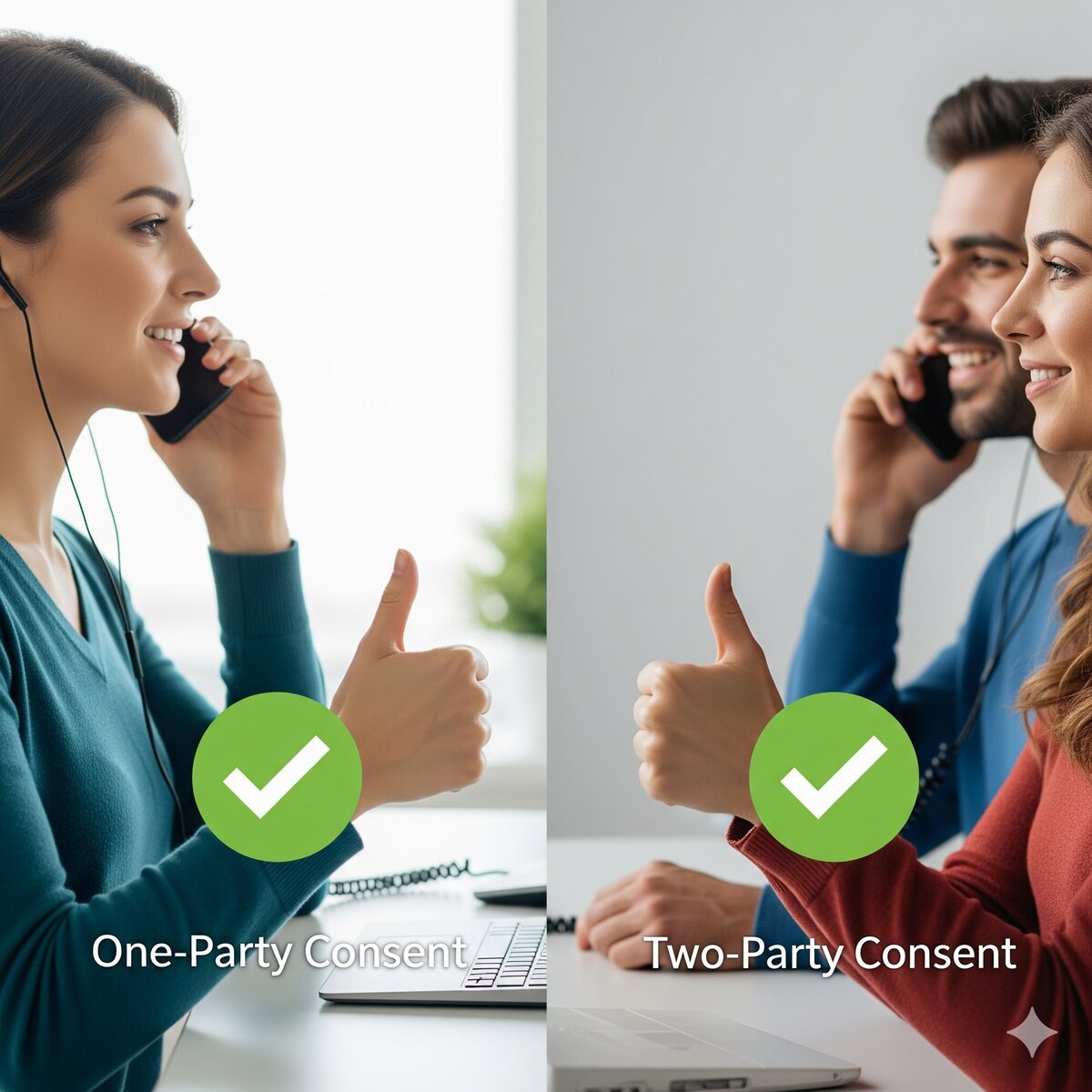
- 38 states follow one-party consent rules - only one person needs to know about the recording
- 11 states require all-party consent - everyone must agree to be recorded
- Interstate calls must follow the strictest state's law involved
- Violations can result in criminal charges and civil lawsuits
- Business recordings have additional regulations under TCPA and industry rules
In an era where phone conversations can be easily recorded with the tap of a button, understanding the legal landscape of call recording has never been more critical. Whether you're a business owner implementing quality assurance programs, a journalist conducting interviews, or an individual protecting your interests, knowing when and how you can legally record phone conversations is essential.
The United States operates under a patchwork of federal and state laws that govern call recording, creating a complex regulatory environment that varies significantly from state to state. While federal law establishes a baseline requirement of one-party consent, individual states have enacted their own, often stricter, requirements that can turn a simple recording into a serious legal violation.
This comprehensive guide will walk you through everything you need to know about call recording laws in 2025, from understanding the fundamental legal concepts to navigating state-specific requirements and implementing compliant recording practices.
The Federal Foundation: Understanding the Wiretap Act

The foundation of call recording law in the United States is the Federal Wiretap Act, formally known as Title III of the Omnibus Crime Control and Safe Streets Act of 1968. This federal statute, later amended by the Electronic Communications Privacy Act (ECPA) of 1986, establishes the baseline legal framework for intercepting and recording wire, oral, and electronic communications.
One-Party Consent: The Federal Standard
Under federal law, recording a phone conversation is legal if at least one party to the conversation consents to the recording. This is known as "one-party consent." In practical terms, this means:
- You can legally record your own phone conversations without informing the other party (in one-party consent states)
- You cannot record conversations between other people unless you have consent from at least one participant
- Recording conversations you're not a part of is generally illegal and considered eavesdropping
- The person consenting must be an active participant in the conversation
Penalties Under Federal Law
Violations of the Federal Wiretap Act carry serious consequences:
- Criminal Penalties: Up to 5 years in federal prison and fines
- Civil Liability: Statutory damages of $100 per day of violation or $10,000, whichever is greater
- Actual Damages: Victims can recover actual damages suffered
- Attorney's Fees: Courts may award reasonable attorney's fees to prevailing parties
State-by-State Requirements: The Critical Divide
While federal law provides the foundation, individual states have the authority to enact more restrictive recording laws. This has created three categories of states:
Follow federal standard - only one party needs to consent to recording
Require consent from all parties involved in the conversation
Have different rules for different situations or types of communications
All-Party Consent States: The Strictest Requirements
The following states require consent from all parties to a conversation before recording:
Complete 50-State Compliance Map
The following table provides a comprehensive overview of recording laws in all 50 states plus the District of Columbia. Use this as a reference guide, but always consult current statutes or legal counsel for the most up-to-date information.
| State | Consent Type | Key Requirements | Maximum Criminal Penalty |
|---|---|---|---|
| Alabama | One-Party | Recorder must be party to conversation | Class C misdemeanor |
| Alaska | One-Party | Standard federal rules apply | Misdemeanor |
| Arizona | One-Party | Standard federal rules apply | Class 5 felony for illegal recording |
| Arkansas | One-Party | Standard federal rules apply | Class A misdemeanor |
| California | All-Party | Applies to confidential communications | Up to $2,500 fine and/or 1 year jail (first offense) |
| Colorado | One-Party | Standard federal rules apply | Class 1 misdemeanor |
| Connecticut | Mixed | Criminal: one-party; Civil: all-party for phones | Class D felony for illegal eavesdropping |
| Delaware | All-Party | Consent from all parties required | Class E felony |
| District of Columbia | One-Party | Standard federal rules apply | Up to $1,000 fine and/or 1 year jail |
| Florida | All-Party | Strict enforcement | Third-degree felony (up to 5 years prison) |
| Georgia | One-Party | Standard federal rules apply | Felony (1-5 years) for illegal recording |
| Hawaii | One-Party | Becomes all-party if device in private place | Class C felony for violations |
| Idaho | One-Party | Standard federal rules apply | Felony (up to 5 years) |
| Illinois | All-Party | Applies to private conversations | Class 4 felony (1-3 years prison) |
| Indiana | One-Party | Standard federal rules apply | Level 5 felony |
| Iowa | One-Party | Standard federal rules apply | Class D felony |
| Kansas | One-Party | Standard federal rules apply | Severity level 8 felony |
| Kentucky | One-Party | Standard federal rules apply | Class D felony |
| Louisiana | One-Party | Standard federal rules apply | Hard labor up to 10 years |
| Maine | One-Party | Standard federal rules apply | Class C crime |
| Maryland | All-Party | Strict enforcement | Up to 5 years prison |
| Massachusetts | All-Party | Prohibits "secret" recordings | Up to 5 years prison |
| Michigan | One-Party* | Courts interpret as one-party if recorder is participant | Up to 2 years prison |
| Minnesota | One-Party | Standard federal rules apply | Gross misdemeanor |
| Mississippi | One-Party | Standard federal rules apply | Up to 5 years prison |
| Missouri | One-Party | Standard federal rules apply | Class E felony |
| Montana | All-Party | Notification required | Up to 6 months jail |
| Nebraska | One-Party | Standard federal rules apply | Class IV felony |
| Nevada | Mixed | All-party for phones, one-party for in-person | Category D felony |
| New Hampshire | All-Party | Consent from all parties required | Class B felony |
| New Jersey | One-Party | Standard federal rules apply | Third-degree crime |
| New Mexico | One-Party | Standard federal rules apply | Misdemeanor |
| New York | One-Party | Standard federal rules apply | Class E felony for illegal eavesdropping |
| North Carolina | One-Party | Standard federal rules apply | Class H felony |
| North Dakota | One-Party | Standard federal rules apply | Class C felony |
| Ohio | One-Party | Standard federal rules apply | Fourth-degree felony |
| Oklahoma | One-Party | Standard federal rules apply | Up to 5 years prison |
| Oregon | Mixed | One-party for phones, all-party for in-person | Class A misdemeanor |
| Pennsylvania | All-Party | Strict requirements | Third-degree felony (up to 7 years) |
| Rhode Island | One-Party | Standard federal rules apply | Up to 5 years prison |
| South Carolina | One-Party | Standard federal rules apply | Up to 5 years prison |
| South Dakota | One-Party | Standard federal rules apply | Class 5 felony |
| Tennessee | One-Party | Standard federal rules apply | Class C felony |
| Texas | One-Party | Standard federal rules apply | Second-degree felony for violations |
| Utah | One-Party | Standard federal rules apply | Third-degree felony |
| Vermont | One-Party | No specific statute; federal law applies | N/A |
| Virginia | One-Party | Standard federal rules apply | Class 6 felony |
| Washington | All-Party | Consent implied if announced and recorded | Gross misdemeanor |
| West Virginia | One-Party | Standard federal rules apply | Felony (1-5 years) |
| Wisconsin | One-Party | Standard federal rules apply | Class H felony |
| Wyoming | One-Party | Standard federal rules apply | Up to 1 year jail |
Recent Legal Changes Affecting Call Recording (2023-2025)

The legal landscape of call recording continues to evolve with technological advancement and changing privacy expectations. Here are the most significant developments:
Michigan courts have definitively interpreted the state's eavesdropping statute to be a one-party consent state when the recorder is a participant in the conversation. This resolved years of legal ambiguity.
Several states have updated guidance on recording virtual meetings and remote work communications. California and New York have issued specific guidelines for recording Zoom, Teams, and other video conferences.
New regulations are emerging around AI-powered call transcription and analysis. The FTC has issued guidance on disclosure requirements when using AI to process recorded calls.

Industry-Specific Regulations

Beyond general recording laws, specific industries face additional regulations:
- Must protect patient privacy in recordings
- Requires secure storage and transmission
- Needs patient authorization for most uses
- Subject to minimum necessary standard
- May require recording of certain transactions
- Strict retention requirements (3-7 years)
- Must be readily accessible for audits
- Subject to Dodd-Frank whistleblower rules
- Clear disclosure at call beginning
- Opt-out mechanisms required
- Do Not Call list compliance
- Time-of-day restrictions
- Cannot record without disclosure
- Mini-Miranda warning requirements
- Restrictions on third-party disclosure
- State-specific additional requirements
International Considerations
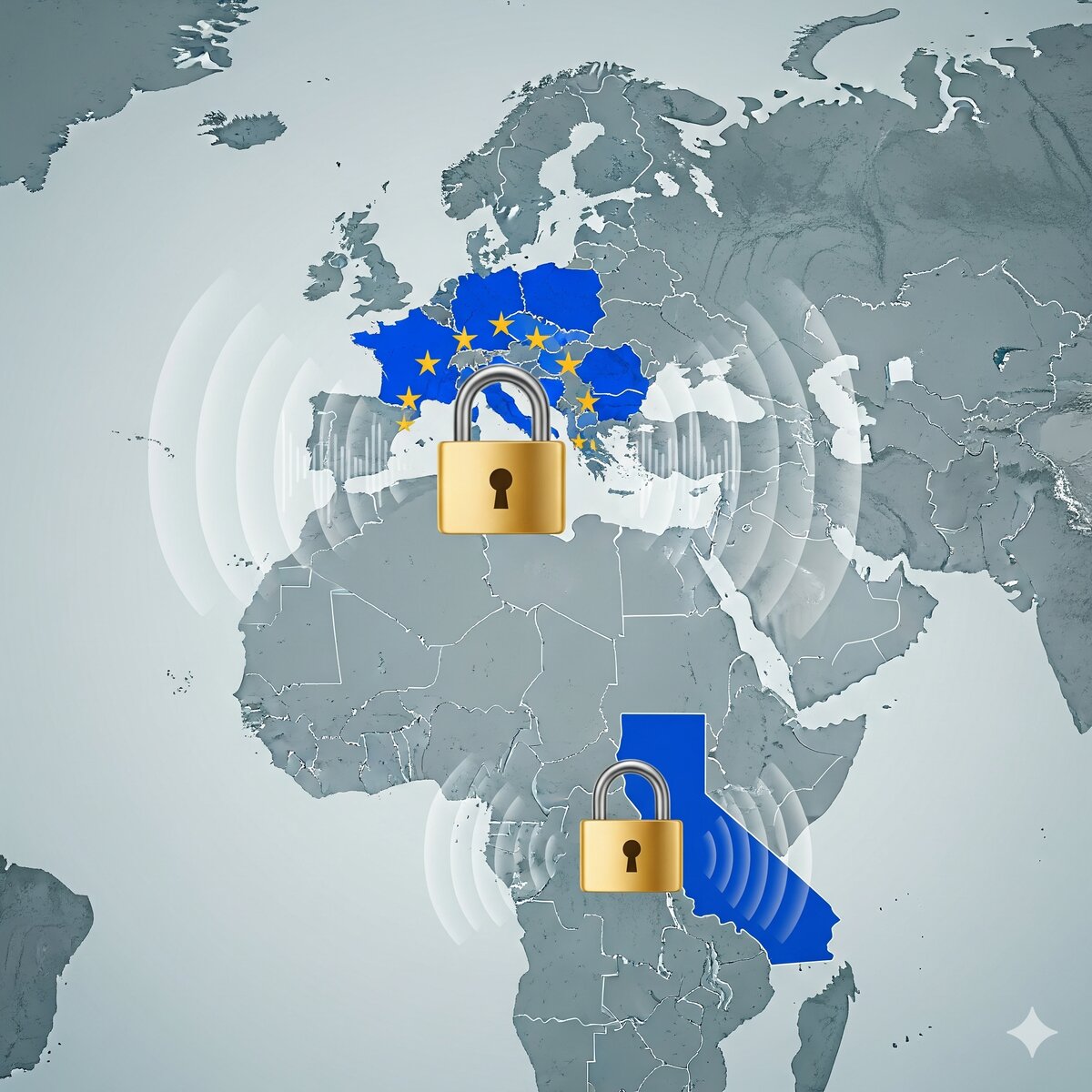
Recording international calls introduces additional complexity:
The General Data Protection Regulation treats call recordings as personal data, requiring:
- •Clear legal basis for recording
- •Explicit consent in most cases
- •Right to erasure ("right to be forgotten")
- •Data minimization principles
The Personal Information Protection and Electronic Documents Act requires:
- •Knowledge and consent for recording
- •Limited use for stated purposes
- •Reasonable security safeguards
- •Access rights for individuals
Best Practices for Compliant Call Recording
The safest approach is to always inform all parties that a call is being recorded and obtain their consent. This satisfies the requirements of even the strictest states.
Example: "This call is being recorded for quality assurance and training purposes. By continuing this call, you consent to being recorded."
- •Use automated announcements for consistency
- •Implement beep tones every 15 seconds (some states)
- •Maintain secure storage with encryption
- •Establish retention and deletion policies
- •Create written policies and procedures
- •Train staff on legal requirements
- •Maintain consent records
- •Regular compliance audits
KeKu's intelligent call assistant automatically handles recording compliance, ensuring you stay within legal boundaries while capturing important conversations. Our system:
- Automatically detects caller locations and applies appropriate consent rules
- Provides clear, natural language disclosure to all parties
- Maintains secure, encrypted storage with automatic retention policies
- Generates compliance reports for audit purposes
Frequently Asked Questions
Generally, no. Most states don't have exceptions for suspected criminal activity. You must still comply with consent requirements. However, you should consult with law enforcement or an attorney, as some states have limited exceptions for certain situations.
In some states, yes. For example, California law recognizes that a beep tone every 15 seconds can serve as notice of recording. However, explicit verbal consent is always safer and clearer.
Yes, but you must comply with applicable state laws. In all-party consent states, you need permission from everyone on the call. For employee training, you should have written policies and obtain employee consent as part of their employment agreement.
The same laws generally apply to video calls. Many platforms like Zoom and Teams have built-in notifications when recording starts, but you should still verbally confirm consent, especially in all-party consent states.
Generally, no. When someone leaves a voicemail, they have implicitly consented to being recorded. However, forwarding or sharing that voicemail may have different legal implications depending on the content and context.
Conclusion: Navigating Call Recording Laws Safely
Understanding and complying with call recording laws is essential in our increasingly connected world. While the patchwork of federal and state regulations can seem overwhelming, following best practices and using appropriate technology can help ensure compliance while still achieving your recording objectives.
Remember these key principles:
- When in doubt, get consent from all parties
- Follow the strictest applicable law for interstate calls
- Use clear, unambiguous disclosure language
- Implement proper security and retention policies
- Stay informed about changing regulations
Whether you're a business owner, journalist, or individual, taking the time to understand and comply with call recording laws protects you from legal liability while respecting the privacy rights of others. When implemented correctly, call recording can be a valuable tool for quality assurance, documentation, and protection.
Related Resources
Read the full text of 18 U.S.C. §§ 2510-2523
View on Cornell LawAccess detailed state statutes and regulations
NCSL ResourcesFCC guidelines for business call recording
FCC Guidelines